

Jason Karlawish is a physician and writer.
He researches and writes about issues at the intersections of bioethics, aging, and the neurosciences. He is the author of The Problem of Alzheimer’s: How Science, Culture, and Politics Turned a Rare Disease into a Crisis and What We Can Do About It and the novel Open Wound: The Tragic Obsession of Dr. William Beaumont. His essays have been published in The Wall Street Journal, The New York Times, Forbes, The Hill, The Los Angeles Times, The Philadelphia Inquirer, STAT, and The Washington Post. His STAT column Neurotransmissions examines the vast problem of dementia. A Professor of Medicine, Medical Ethics and Health Policy, and Neurology at the University of Pennsylvania, he is co-Director of the Penn Memory Center, where he cares for patients, and executive producer of the Age of Aging, a podcast that examines how to live well with an aging brain. He lives in Philadelphia.
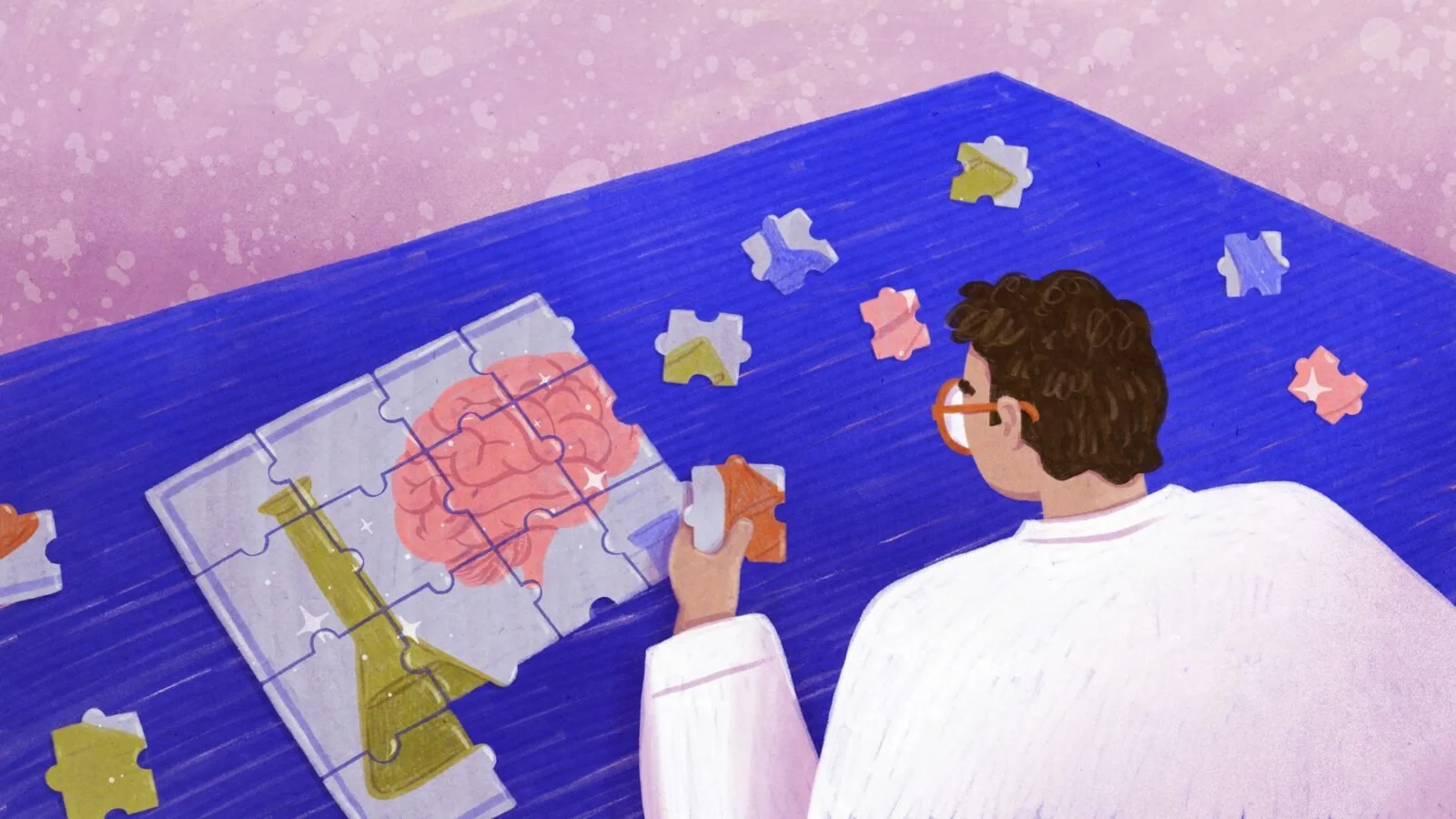
Dementia should be a campaign issue —not an insult
Dementia is a big problem Americans want to solve together
Hot summer days are fading fast, but the midterm election season is heating up. In the race up to Nov. 3, among the top issues are the economy, health care, and immigration. All three are deeply connected to another issue that needs attention: dementia.
As many as 7.1 million Americans are living with dementia, and 12 million friends and family performing the work of caregiving. Their mental anguish, out-of-pocket expenses, the time caregivers devote to their work, the wages lost from forgone work — all create spectacular costs for America’s families. In the coming years, as Americans age, this anguish and costs will only grow.
Dementia is clearly a big problem, and yet, sadly, our politicians — both Democrats and Republicans —talk about it not like adults, but like schoolyard bullies. They use the word as a vicious rhetorical cudgel to mock and deride an opponent’s mental fitness. This was especially true in 2024, when politicians accused opponents of having dementia. Sadly, the name-calling continues this midterm election.
Americans need to have a responsible conversation about dementia, and our politicians could inspire this. Over the past few weeks, I spoke with leaders at three national organizations dedicated to tackling dementia. I asked each: What are the harms of the way politicians talk about it? What should they say instead? What are concrete, real-world solutions?….
Bonus material.
My takeaway from STAT Summit 2026:
I’m back in Philadelphia from the October 14-15 STAT Summit 2026. The view from 33rd floor of The State Room in downtown Boston was spectacular! I imagined I could see all the way to China, and as I did, I was worried because a big takeaway from the two days is American science is losing to China.
Holden Thorp, Editor-in-Chief of the Science Family of Journals explained how submissions to their journals from Chinese universities are increasing in both number and quality. In contrast, submissions from American-based investigators are in decline, and MIT’s Sally Kornbluth reports decline in both the number of trainees in university doctoral programs and the preparedness of college students in essential subjects such as calculus. Francisco Gimenez, a partner at the venture capital firm 8VC explained venture capital investment in US biopharma is shrinking. Where's the money going? China.
Why is this happening? Biogen’s President and Chief Executive Officer Christopher Viehbacher offered a conceptual map when he explained how getting a drug to market in the US relies on the “three A’s:” approval, access and acceptability.
Former FDA commissioner Robert Califf summed up the aftermath of mass layoffs and exodus of FDA staff perpetrated by DOGE as one the worst disasters in American history. I’ll add CDC and NIH to his forensic autopsy. These events, together with the autocrats’ assault on the American university, their politicization of grant reviews and shutting the door to trainees from abroad have degraded doctoral training programs, demoralized junior faculty and therefore threaten the quality and quantity of workforce for regulatory science and biopharma.
As for access, the growth in the uninsured and underinsured Americans – a condition that caused Sarah Emond, President and CEO of ICER, to posit the collapse of the American health care system – means access to new therapies will become even more challenging, if not impossible. And when China gets to set the price (it is their discovery after all) those new therapies could be even more expensive.
The more access to health care becomes a privilege and an expense, the more Americans have reason to question supporting our fragile research ecosystem because when taxpayers add health care to the list of necessities like groceries and gas that they struggle to afford, the more they don't trust the system to care for them. Absent trust, it’s hard to ask them to make long-term investments in that system or care about the training of some junior doctoral student studying protein misfolding.
For American biopharma all this portends the end of innovation and the rise of decline and stagnation. Substitute Italy, Costa Rica or Australia for China and I’d sound the same alarm.

The ACED tool
Why have thousands of psychologists, physicians, caregivers and social workers from all over the world requested a copy of the ACED? Because they know that to promote the well-being and dignity of a person with marginal capacity, the person needs an assessment of the capacity for everyday decisionmaking.